What Causes Low Water Pressure? Top Fixes for Homeowners
Water should flow like a well-rehearsed orchestra: steady, strong, and reliable. But when your shower turns into a trickle or the kitchen tap barely fills a glass, frustration builds fast. At Rafi Plumbing, we know that low water pressure isn’t just an inconvenience—it can signal bigger plumbing issues and even disrupt your day-to-day life at home or work.
You’re not alone. Many homeowners and business owners face water pressure problems at some point. Acting early and understanding the basics can help you avoid major headaches or emergency plumbing calls down the road.
Common Causes of Low Water Pressure 🚰
Water pressure issues can feel like a mystery, but they’re usually rooted in a handful of common problems. Here’s what might be slowing your flow:
- Hidden Leaks: Even a small crack in your pipes can bleed pressure throughout the system.
- Pipe Blockages: Mineral buildup, rust, or debris can narrow pipes, choking off water flow.
- Municipal Supply Issues: Sometimes the problem starts outside your property—roadwork, hydrant use, or city supply changes can all cause temporary low pressure.
- Old or Corroded Pipes: Galvanized steel and old copper pipes can corrode over time, restricting flow.
- Faulty Fixtures: Aerators or showerheads clogged with sediment impede water.
- Pressure Regulator Failure: If your home has a pressure-reducing valve, failure here can drop pressure everywhere.
- Sump Pump or Water Heater Issues: Problems with these systems can cause uneven water flow, especially if you notice low pressure only on hot water.
How to Diagnose the Problem
Think of diagnosing low water pressure like following clues in a detective story. Here’s a step-by-step flowchart to help you get started:
Step 1: Pinpoint Where the Problem Occurs
- Single Fixture: Only the bathroom sink? Start there.
- Whole House or Business: Every tap is weak? Widen your search.
Step 2: Check Simple Fixes
- Aerators and Showerheads: Unscrew and clean out any gunk.
- Shut-Off Valves: Make sure valves under sinks and at the water main are fully open.
Step 3: Look for Leaks
- Visual Inspection: Check for wet spots, drips, or unexplained puddles.
- Meter Test: Turn off all water, then check your meter. If it moves, you likely have a hidden leak.
Step 4: Compare Hot vs. Cold
- Hot Water Only: Issue might be with your water heater.
- Both Hot and Cold: Likely a plumbing or supply issue.
Step 5: Ask Neighbors
If your neighbors also have weak flow, the problem could be with the municipal supply.
Step 6: Read the Water Pressure
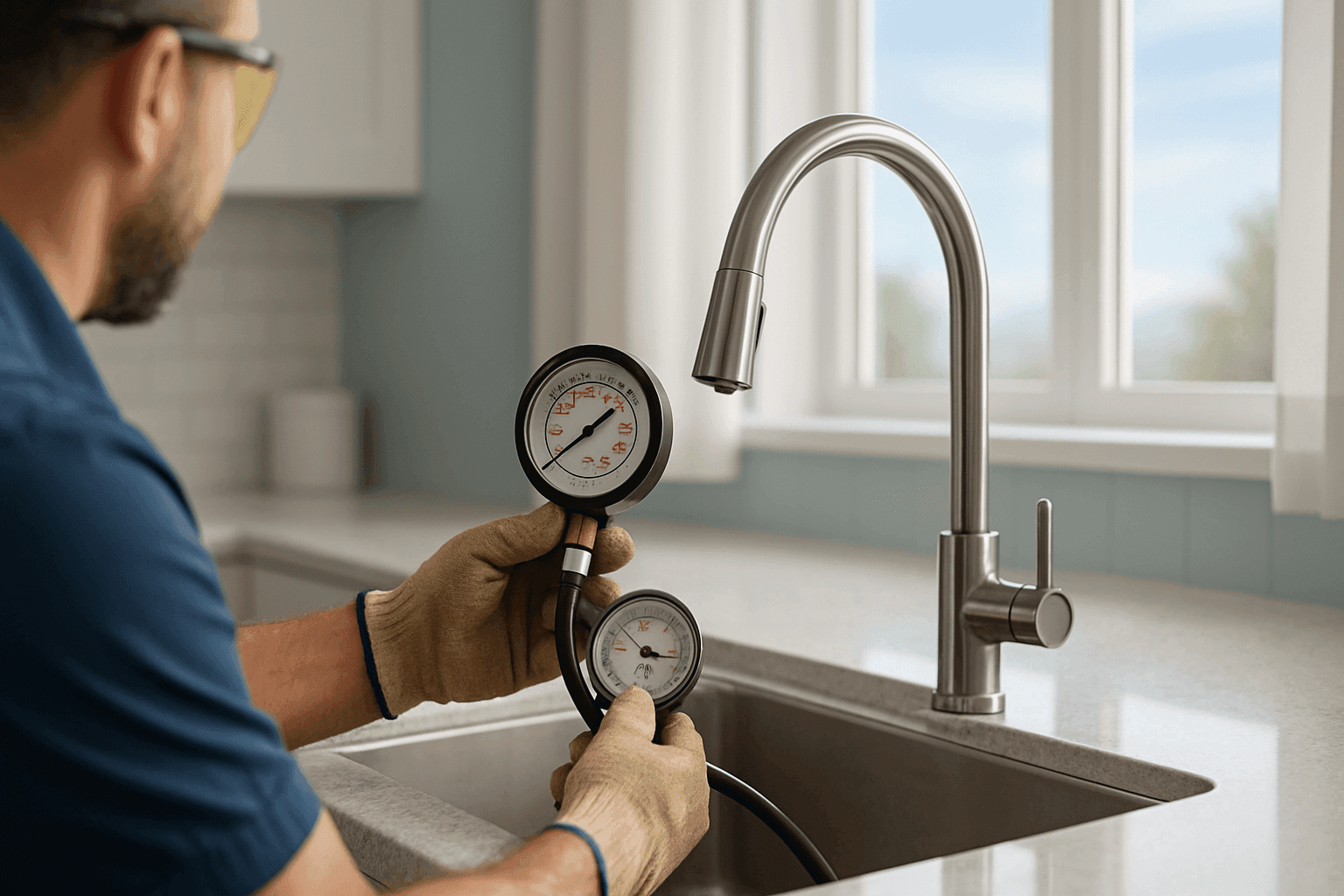
- Attach a pressure gauge to an outdoor spigot. Normal residential pressure should be 40–80 psi, according to the International Plumbing Code (IPC). Anything lower needs attention.
DIY Remedies for Low Water Pressure
Some fixes are simple, safe, and worth trying before calling in help:
- Clean Faucet Aerators: Unscrew, rinse, and replace.
- Replace Showerheads: Clogged or outdated heads can be swapped for newer, high-flow models.
- Flush Water Heater: Sediment buildup can reduce hot water pressure—follow manufacturer instructions to flush.
- Check Pressure Regulator: Adjust if you’re comfortable. If not, call a plumber.
- Clear Blockages: Use a plunger or drain snake for minor clogs.
- Tighten Loose Connections: Sometimes, tightening a fitting can stop a minor leak.
Important: Never use harsh chemicals in drains or attempt repairs that require pipe cutting unless you’re experienced. Doing so can damage your plumbing or even violate local code.
When to Call a Pro 👷
Some signs mean it’s time to pick up the phone:
- Sudden Drop in Pressure: Especially if accompanied by wet spots, stains, or a spike in your water bill.
- Multiple Blocked Fixtures: Might indicate a main line or sewer problem.
- Noisy Pipes or Banging: Could mean dangerous “water hammer” or failing valves.
- Old Pipes: Corroded, galvanized, or lead pipes should always be evaluated by a licensed plumber.
- Gas or Sewer Smell: Immediate safety risk—call an emergency plumbing service right away.
Licensed plumbers like Rafi Plumbing are trained to follow current plumbing and gas codes, ensuring repairs are safe and up to standard. We also have specialized leak detection tools, hydro-jetting equipment, and knowledge of city water regulations.
Safety First: Quick Checklist
- Shut off water at the main if you spot a major leak.
- Never attempt repairs on gas lines or water heaters unless you’re licensed.
- Use rubber gloves and eye protection when handling plumbing fixtures.
- Avoid using open flames or heat sources near suspected gas leaks.
- Confirm local plumbing codes (often published by your city’s water supplier or building department).
What Plumbers Do On Arrival
When you call Rafi Plumbing for low water pressure, here’s what you can expect:
- Full System Inspection: We check every faucet, fixture, and visible pipe for signs of damage, leaks, or buildup.
- Pressure Testing: Using calibrated gauges, we measure actual water pressure at critical points.
- Leak Detection: Our team uses acoustic tools or thermal imaging to pinpoint hidden leaks.
- Code Compliance Check: All repairs are made to current International Plumbing Code or Uniform Plumbing Code standards.
- Clear Explanation: We walk you through what’s happening and your options before starting work.
Prevention & Maintenance Tips
- Annual Plumbing Checkups: Preventative maintenance can catch issues before they start.
- Flush Water Heaters: Prevent sediment buildup at least once a year.
- Install Water Softeners: In hard water areas, this reduces scale and mineral buildup.
- Clean Aerators Regularly: Quick and easy, this keeps water flowing.
- Know Your Shut-Offs: Be ready to act if something goes wrong.
Regular maintenance keeps your plumbing healthy, saving money (and stress) over time.
Costs & Time Factors
Every situation is unique, but here’s what you can expect:
- Simple Aerator Cleaning: Takes minutes, usually no cost.
- Leak Repairs and Pipe Fixes: Can range from a quick patch to a more involved repiping job, depending on severity.
- Pressure Regulator Replacement: Usually completed in a couple of hours.
- Major Blockages or Sewer Line Repair: May take half a day or more, especially if digging is involved.
Remember, ignoring pressure problems can lead to bigger, costlier repairs down the line.
When It’s an Emergency ⏰
- Burst Pipes: Shut off the water and call immediately.
- Major Leaks: Water pooling or flooding? That’s an emergency.
- Sewer Backups: Foul odors or slow-draining fixtures throughout the building need fast professional attention.
- Gas Leaks: Smell gas? Evacuate and call emergency services and your plumber.
Rafi Plumbing is available for emergency plumbing calls—24/7, every day.
FAQ
Why is my water pressure low in just one faucet?
This usually means a local blockage at the aerator or fixture. Try cleaning it or replacing the affected part.
Can water heaters cause low water pressure?
Yes. Sediment inside the tank, faulty valves, or aging heaters can restrict hot water flow. Regular maintenance can help.
Could my city’s water supply be to blame?
Absolutely. If your neighbors also notice low pressure, contact your municipal water supplier. Local work or system maintenance could be affecting service.
How do I know if it’s a hidden leak?
Look for damp spots, mold, or an unexplained rise in your water bill. A meter test (turn off all water and watch the meter) can also reveal leaks.
Local and Seasonal Considerations
- Cold Weather: Pipes can freeze and burst in winter, dropping pressure or causing total loss of water.
- Drought Conditions: City water restrictions or supply issues can lower pressure, especially during peak use.
- Renovations or Roadwork: Municipal work may disrupt service—check local advisories if you notice sudden changes.
Always confirm with your local water supplier if you suspect a widespread issue. Building codes and regulations can vary based on location and season.
If you’re struggling with low water pressure, don’t wait—small problems can become big ones overnight.
Call Rafi Plumbing now — or reach us anytime at 888-600-0415 .