Sewer Line Installation: What Property Owners Need to Know
When drains stop flowing and toilets turn sluggish, life hits pause. Whether you own a home or manage a busy storefront, sewer problems never arrive at a good time. If you’re facing a new sewer line installation, you’re likely searching for clarity—and maybe a little peace of mind.
At Rafi Plumbing, we’re called to properties every week for emergency plumbing issues like these. Let’s walk through what really happens during sewer line installation, so you know what’s coming and how to keep things running smoothly after the work is done.
Planning Your Sewer Line 🛠️
Before a single shovel hits the ground, planning paves the way. Think of it as the blueprint for a safe, lasting fix.
Site Assessment
Every property—whether it’s a cozy bungalow or a sprawling commercial plaza—has its own twists. Rafi Plumbing starts with a thorough inspection. We look for:
- Existing pipe layout and age
- Soil conditions and slope (gravity matters!)
- Location of trees, driveways, or structures above the line
- Accessibility for machinery and crew
- The shortest, safest route for the new pipe
A skilled eye can spot hidden risks like tree roots or unstable soil. Getting this wrong can mean headaches later.
Residential vs. Commercial Needs
Homes and businesses face different challenges. In a house, the work often means protecting landscaping or driveways. For commercial properties, the stakes are higher—think parking lots, heavy foot traffic, even keeping operations running during construction.
We tailor our plan to minimize disruption. Sometimes, work is staged outside business hours or in phases for larger buildings.
Installation Steps
Let’s break down what actually happens. Sewer line installation isn’t just digging a trench and dropping in a pipe. Each step has a reason.
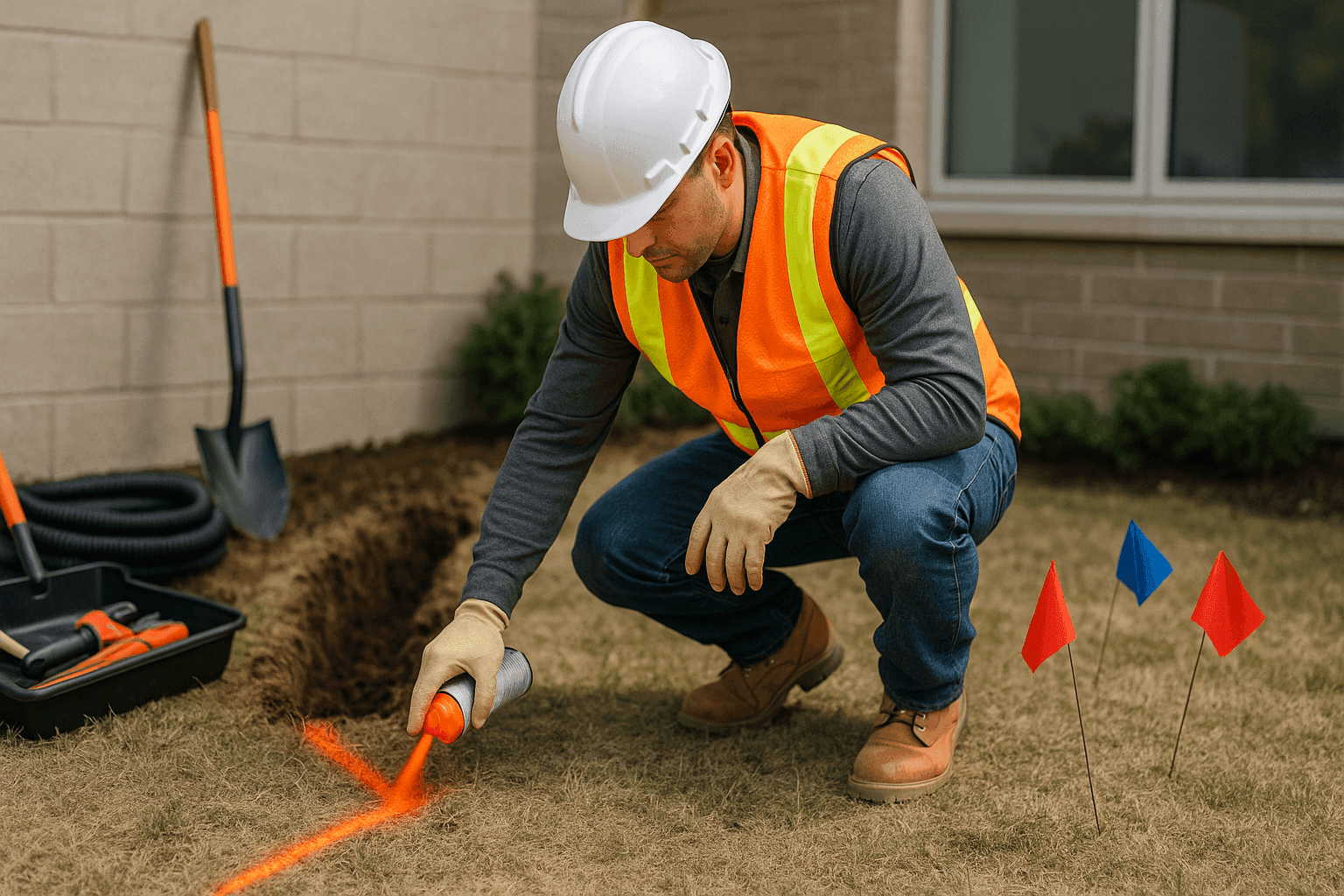
1. Marking and Locating
First, underground utilities are marked. This keeps gas, water, and electric lines safe. National guidelines like those from the Common Ground Alliance require “call before you dig” protocols.
2. Excavation
Next, we dig. Trenching equipment carves out the path for new pipe. Depth matters. Too shallow, and you risk freezing or accidental damage. Too deep, and costs rise fast.
On some jobs, trenchless methods are possible. This minimizes surface disruption, especially useful for commercial sites or established landscapes.
3. Pipe Material Selection
Not all pipes are equal. Depending on your property, soil, and local code, we might use:
- PVC or ABS (resistant to corrosion, used in many new installs)
- Cast iron (traditional, durable, often in commercial or older buildings)
- HDPE (flexible, tough, often used for trenchless methods)
We choose materials designed to last and fit the job.
4. Laying the Pipe
With the trench prepared, new pipe sections are carefully installed and joined. Proper slope is critical—too flat and waste stagnates, too steep and water outpaces solids.
5. Backfill and Temporary Restoration
Once the pipe is set, trenches are backfilled in layers. This prevents future settling. For driveways or lawns, temporary fixes keep things safe until final restoration.
6. Final Inspection
Before we close up, the work is inspected. Local inspectors—sometimes city, sometimes county—review the installation to ensure it meets code. This isn’t just a formality; it protects you from future headaches.
7. Surface Restoration
The last step: restoring your property. Asphalt, concrete, or landscaping is repaired so things look right again.
Permits and Codes 📝
Cutting corners isn’t an option. Every sewer line job must comply with local plumbing codes and building regulations (see the International Plumbing Code for a widely used standard). Permits are required for nearly all new installations.
- Your plumbing contractor should secure all necessary permits before starting.
- Inspections by local authorities are mandatory at key stages.
- Code compliance isn’t just legal—it ensures your new line is safe, functional, and less likely to fail.
For commercial properties, expect additional requirements like ADA compliance or enhanced backflow prevention.
Aftercare and Maintenance
A new sewer line should perform for decades. But like any major system, a little care goes a long way.
Keep Things Flowing
- Avoid flushing wipes, feminine products, or grease—these clog lines fast.
- Schedule periodic video inspections, especially for properties with large trees or heavy usage.
- If you notice slow drains or odd smells, act early. Delays can turn a simple fix into an emergency plumbing call.
Warranty and Documentation
Ask your installer for detailed records: pipe material, depth, route, and inspection results. This protects your investment and helps with future repairs or property sales.
For peace of mind, reputable plumbers document code compliance and provide written terms for workmanship.
Practical Tips for Homeowners & Property Managers
- Take photos of the work during installation—future repairs will be easier.
- Keep all permits and inspection sign-offs in a safe place.
- Ask about “what if” scenarios: What if a root blocks the line in five years? What if your property settles?
References
- International Plumbing Code (IPC)
- Occupational Safety and Health Administration (OSHA) trenching guidelines
- Common Ground Alliance “Call Before You Dig” recommendations
Ready to Start or Need Emergency Plumbing Help?
Sewer line installation may seem daunting, but with clear steps and a professional team, it’s manageable—and your property will be better for it.
Call Rafi Plumbing now — or reach us anytime at 888-600-0415 .