Leak Detection Methods: How Pros Find Hidden Water Damage
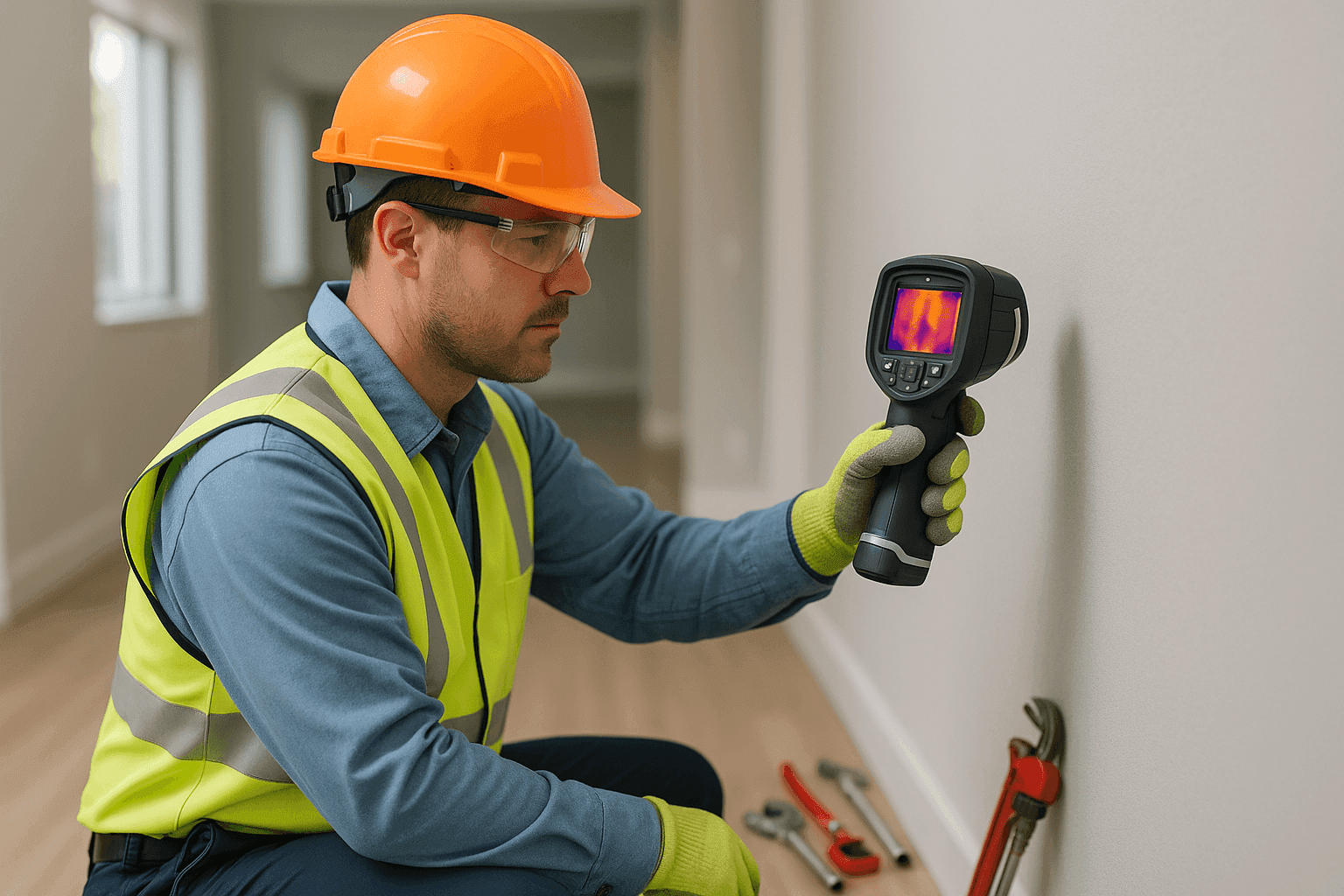
Water leaks don’t announce themselves with a trumpet. They creep—quiet as a mouse—behind your walls, under floors, or in your business’s ceiling tiles. One small drip can cause big headaches. Left unchecked, hidden water can rot wood, grow mold, and damage your property’s heart.
At Rafi Plumbing, we know that catching water leaks early can save you thousands in repairs. Our team responds 24/7 for emergency plumbing, using the latest technology to spot leaks fast—without tearing your home or office apart.
Signs of Hidden Leaks 🕵️
Water doesn’t always leave an obvious trail. But it does whisper. Here’s what to look for:
- Unexplained spikes in your water bill. Your usage hasn’t changed, but the bill keeps climbing.
- Mysterious damp spots. Are there stains growing on your ceiling or walls? Feel a squishy patch on the floor?
- Musty smells. Mold and mildew love hidden moisture.
- Paint or wallpaper bubbling. The finish on your walls can blister or peel when water sneaks behind it.
- The sound of constant dripping or running. Even when everything’s off.
- Cracks in your foundation or walls. Water can push its way into the smallest openings, causing structural shifts.
If you spot any of these, don’t shrug them off. Small leaks often mean bigger trouble brewing out of sight.
Leak Detection Tools
Plumbers don’t rely on guesswork. At Rafi Plumbing, we use a toolbox built for precision. Here’s how pros see the invisible:
Infrared Cameras
Think of these as X-ray specs for your home. Infrared cameras “see” heat differences. Wet spots behind walls or under floors show up as cool, dark patches. It’s fast, accurate, and—best of all—non-invasive. No need to punch holes just to look inside.
Acoustic Listening Devices
Leaks make noise—tiny ones, but sound travels. Using ultra-sensitive microphones, we listen for hissing, dripping, or bubbling. These devices help pinpoint the exact spot where water escapes, even through thick concrete.
Moisture Meters
These are like metal detectors but for wetness. Moisture meters measure how damp a material is. We can test drywall, floors, and even insulation, zeroing in on the leak’s trail.
Endoscopic Cameras
When a closer look is needed, plumbers use tiny cameras snaked into pipes or walls. It’s like sending a scout down a tunnel to report back.
These tools mean less guesswork and less mess. Your property stays intact while we find the trouble at its source.
Process Overview
Wondering what to expect if you call for leak detection? Here’s how it usually works:
-
Initial Assessment
We start by listening—to you and your building. What have you noticed? Where are the signs? -
Visual Inspection
We look for stains, moisture, or structural clues. Sometimes, the problem is right in front of us. -
Testing with Technology
Out come the infrared cameras, listening devices, and moisture meters. We scan the suspected areas, piece by piece, until the evidence speaks. -
Pinpointing the Leak
The goal: Find the exact location. Not just “somewhere in the wall,” but the specific spot—so repairs are targeted and efficient. -
Reporting & Next Steps
We explain our findings in plain language and show you any images or readings. From there, we help you decide what to do next, whether it’s leak repair, pipe replacement, or emergency plumbing action.
Benefits of Early Detection
Catching leaks early isn’t just about saving water. Here’s what you gain:
- Lower repair costs: Early fixes mean smaller repairs.
- Reduced water bills: Stop paying for wasted water.
- Healthier living spaces: Prevent mold and mildew before they can grow.
- Protect your property: Avoid structural damage from rot, warping, or erosion.
- Peace of mind: Know that hidden leaks aren’t quietly destroying your investment.
The International Association of Certified Home Inspectors (InterNACHI) recommends routine leak checks to keep homes and businesses safe.
Quick Safety Checklist
Don’t wait for disaster. Use this checklist to spot trouble before it spreads:
- Check under sinks and around toilets for dampness.
- Look at your water meter before and after a two-hour period with no water use. If the number changes, you might have a leak.
- Inspect ceilings and walls for stains.
- Listen for running water when all taps are off.
- Make sure your sump pump and backflow prevention devices are working, especially before rainy seasons.
If anything seems off, reach out for professional help.
DIY vs. Call a Pro
Some leaks are easy to spot—a dripping faucet or a puddle under the sink. But hidden leaks are tricky. Here’s when you can try it yourself, and when to call Rafi Plumbing:
DIY
- Tighten loose fixtures.
- Replace worn washers on faucets.
- Use food coloring in the toilet tank to check for slow leaks.
Call a Pro
- Water stains with no clear source.
- Persistent musty odors.
- Sudden drop in water pressure.
- Unexplained increases in water bills.
- Suspected leaks in walls, floors, or ceilings.
Remember: Non-invasive leak detection saves time, money, and your property’s structure.
What Pros Do On Arrival
When you call Rafi Plumbing for emergency plumbing or planned maintenance, here’s what happens:
- We arrive with advanced leak detection gear.
- Our team listens to your concerns and surveys the area.
- We use thermal imaging and acoustic tools to scan for leaks.
- If needed, we use moisture meters or endoscopic cameras for a closer look.
- Once located, we discuss the repair options—whether it’s repiping, pipe repair, or another service like water heater installation near you.
We’re always careful to minimize disruption and respect your space.
Prevention & Maintenance
The best leak is the one that never happens. Here’s how to lower your risk:
- Schedule annual plumbing inspections.
- Install water filtration systems and backflow prevention devices.
- Maintain water heaters, sump pumps, and boiler systems.
- Insulate pipes before winter to prevent freezing and bursting.
- Know where your main water shutoff is—this can stop damage fast in an emergency.
Check local building codes (such as the Uniform Plumbing Code or your city’s regulations) for guidelines on installation and maintenance.
Costs & Time Factors
Every leak is different. But here’s what influences the cost and time:
- Location: A leak in a visible pipe may take minutes; one buried in a wall takes longer.
- Severity: Small leaks are usually quick. Large or multiple leaks can take more time to detect and fix.
- Access: Finished basements or tight crawl spaces can add complexity.
- Tools required: Some advanced detection methods add to the cost, but save on repairs.
Most professional leak detection jobs take 1–3 hours. Fast action keeps costs lower and limits damage.
When It’s an Emergency
Certain leaks can’t wait. Here’s when to call for emergency plumbing—immediately:
- Water is gushing or pooling.
- You’ve lost water pressure suddenly.
- Sewage smells or visible backups.
- Gas line issues (call for gas safety checks right away).
- Flooding near electrical panels.
In these situations, shut off your main water valve and call Rafi Plumbing. We’ll respond 24/7 to protect your home or business.
FAQ
How do I know if I have a hidden leak?
Watch for higher bills, damp spots, stains, or musty smells. If in doubt, call for professional leak detection.
Will leak detection damage my property?
Most modern methods are non-invasive—no unnecessary holes or mess. A small access point may be needed for camera inspection, but demolition is rare.
Can I prevent leaks altogether?
Regular maintenance, proper installation, and seasonal checks greatly reduce your risk. No system is foolproof, but prevention pays off.
Are leak detection services worth it for businesses?
Absolutely. Leaks can cause downtime, property damage, and health risks in commercial spaces. Early detection protects your investment and reputation.
Local/Seasonal Considerations
Here’s what to watch for, season by season:
- Winter: Frozen pipes are a major cause of leaks. Insulate exposed pipes and monitor for drops in pressure.
- Spring: Melting snow and heavy rains can overwhelm sump pumps and cause foundation leaks.
- Summer: High water use (sprinklers, pools) can strain old pipes.
- Fall: Falling leaves can clog outdoor drains, leading to backups and leaks.
Residential and commercial properties both face these risks—routine checks and seasonal prep go a long way.
When hidden water threatens your space, Rafi Plumbing is ready—day or night. Our fast, non-invasive leak detection means less mess and more peace of mind.
Call Rafi Plumbing now — or reach us anytime at 888-600-0415 .