How to Tell If You Need a Water Pressure Regulator
Is your shower roaring instead of flowing? Faucets that spray, pipes that groan, toilets that randomly run—these aren’t just annoying quirks. They could be your home or business’s way of crying out for help. When water pressure is too high, it’s like a freight train running through your plumbing.
At Rafi Plumbing, we’ve seen how unchecked water pressure turns a peaceful home into a place of leaks, repairs, and costly headaches. High pressure doesn’t just waste water—it can damage everything from your pipes to your water heater. Let’s talk about why a water pressure regulator might be the unsung hero your plumbing system needs.
Why Pressure Matters 🚰
Water pressure isn’t just a number. It’s the silent force guiding every drop from your city supply, through your pipes, and out your taps. If it’s too low, showers are a dribble. Too high, and your entire plumbing system is under stress—like blowing up a balloon until it pops.
Most homes and businesses need water pressure between 40 and 80 psi (pounds per square inch). Above that, you’re playing with fire. According to the International Plumbing Code, anything over 80 psi should be controlled with a pressure-reducing valve (PRV), also known as a pressure regulator.
What’s at Stake?
- Leaks: Pipes and joints can only take so much force before water finds a way out.
- Fixture Damage: Faucets, toilets, water heaters—they all have limits. High pressure can break seals and crack tanks.
- Shortened Appliance Life: Water heaters and boilers can fail years sooner.
- Wasted Water: More pressure equals more flow, even when you don’t need it.
- Code Violations: Many local codes require pressure regulation for safety and conservation.
Unchecked pressure is like letting a toddler play with a fire hose—eventually, something’s going to get soaked.
Signs You Need a Regulator
Not every plumbing problem screams “high pressure,” but there are clear warning signs. Watch for these in your home or business:
- Noisy Pipes: Banging, thumping, or whistling sounds (often called “water hammer”) when you turn faucets on or off.
- Leaky Faucets or Toilets: Fixtures that won’t stop dripping, even after new washers.
- Toilet Tank Trouble: Tanks that fill too quickly or overflow unexpectedly.
- Sudden Appliance Failures: Water heaters or dishwashers breaking down more than usual.
- Shortened Life of Plumbing Fixtures: Replacing faucets, hoses, or valves more often than friends or neighbors.
- High Water Bills: More water usage, without any lifestyle change.
- Spraying Faucets: Water shoots out with unexpected force, especially when you first turn it on.
If you notice any of these, high water pressure could be the root cause.
Testing Pressure
Think of testing water pressure like weighing your suitcase before a flight—better to check before you hit a problem.
Here’s how to check your water pressure:
- Buy a Pressure Gauge: Available at hardware stores for less than a takeout lunch.
- Find an Outdoor Spigot: Remove any hoses for an accurate reading.
- Screw on the Gauge: Tighten it by hand until snug.
- Turn on the Tap: Read the number on the dial.
- Check at Different Times: Water pressure can surge overnight or during low usage in your area.
A reading above 80 psi means your system is under too much stress. The sweet spot? 50–70 psi for most homes and commercial properties.
Safety Tip: If you’re in a multi-story building or commercial space, pressure can vary by floor. Test at the lowest and highest points if possible.
Installation and Maintenance
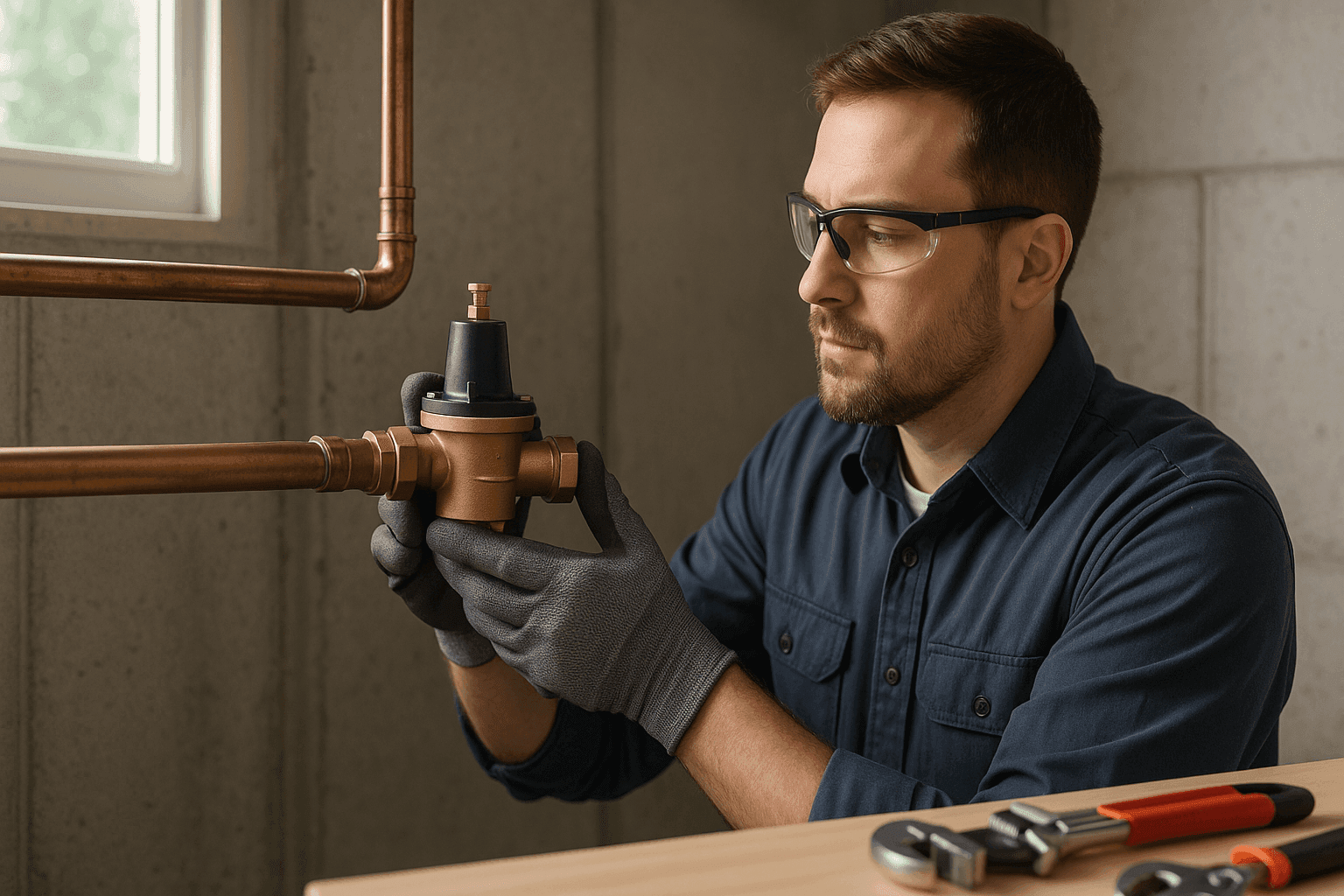
A water pressure regulator isn’t something you slap on like a band-aid. It’s a mechanical device, typically installed where the main water line enters your property.
How Installation Works
- Shut Off Main Water: Always the first step.
- Cut the Pipe: The regulator fits directly into your main line.
- Fit and Secure the Regulator: Ensuring the arrow points in the direction of water flow.
- Restore Water and Test: Check for leaks and confirm the new, safe pressure reading.
Some installations require permits or inspections—check local plumbing codes or ask your installer. At Rafi Plumbing, our licensed plumbers always follow city and state guidelines to keep your property safe and up to code.
Maintaining Your Regulator
- Annual Inspection: Regulators can wear out or clog over time.
- Listen for Changes: If your pipes get noisy again, or pressure creeps up, it’s time for a checkup.
- Regular Testing: Use your pressure gauge every few months.
A well-maintained regulator protects your plumbing, appliances, and wallet.
Quick Safety Checklist 🛠️
- Check for leaks around the main shutoff and regulator.
- Test water pressure annually (or after major plumbing work).
- Inspect for corrosion or mineral buildup on the regulator.
- Never exceed 80 psi as recommended by the International Plumbing Code.
- Call a licensed plumber for regulator installation or if you spot warning signs.
DIY vs. Call a Pro
Some homeowners and handy business owners like to tackle plumbing themselves. But installing a pressure regulator isn’t just about twisting a few bolts. It’s cutting, fitting, and testing under pressure—literally.
DIY is possible if you:
- Have plumbing experience.
- Own the right tools (pipe cutters, wrenches, Teflon tape).
- Can shut off water safely for hours.
Call a professional if you:
- Aren’t sure where the main line is.
- See corrosion or unusual pipe materials.
- Need code-compliant installation.
- Want a warranty or inspection after work.
When in doubt, bring in the pros. Incorrect installation can cause leaks, water damage, or even void your insurance.
What Pros Do On Arrival
When Rafi Plumbing arrives, here’s what you can expect:
- Full Pressure Test: We confirm pressure at several points, not just one.
- Code Compliance Review: We check your setup against local and national plumbing codes (like IPC and Uniform Plumbing Code).
- Inspection of Main Line: Looking for corrosion, leaks, or weak joints.
- Precise Installation: We install or replace the regulator, ensuring it’s set to the ideal pressure for your property.
- System Check: All fixtures tested for proper operation before we leave.
We’re always happy to explain our work and answer any questions, so you feel confident about your plumbing.
Prevention & Maintenance
Like oil changes for your car, regular checks keep your plumbing healthy. Here’s how to stay ahead:
- Test pressure every 6–12 months.
- Schedule annual plumbing inspections—especially for older homes or commercial properties.
- Replace regulators every 5–10 years, or sooner if you notice issues.
- Flush your plumbing system periodically to prevent sediment buildup.
Prevention is simpler (and cheaper) than fixing a burst pipe.
Costs & Time Factors 💡
Installing or replacing a water pressure regulator isn’t free, but it’s far less expensive than repairing water damage from leaks or burst pipes.
- Cost Factors: Price varies by property size, regulator type, and pipe material.
- Time: Most installations take 1–3 hours for a pro. DIY could take longer, especially if you hit a snag.
- Maintenance: Occasional checks are quick—less than 10 minutes with a pressure gauge.
Remember: Delaying can lead to emergency plumbing calls, which are always more stressful (and expensive).
When It’s an Emergency
Sometimes, high water pressure leads to sudden, serious problems:
- Burst pipes
- Flooded basements
- Major leaks from water heaters or boilers
- Sewer line backflow or breakage
If you see water gushing or hear pipes banging loudly, turn off your main water supply immediately. Then, call emergency plumbing help. Fast action limits the damage and keeps your property safe.
FAQ
How do I know if my city water pressure is too high?
Test with a pressure gauge. Readings over 80 psi mean you need a regulator.
Can I adjust my own water pressure regulator?
Some regulators have an adjustment screw, but it’s best to let a licensed plumber handle it for accuracy and safety.
Will a pressure regulator affect my water flow?
It controls pressure, not flow. You’ll still get strong showers—just without the risk.
Is a regulator required by law?
Many local codes (and the International Plumbing Code) require a regulator if pressure exceeds 80 psi.
Local/Seasonal Considerations 🌦️
In some areas, water pressure changes with the seasons. Heavy rain, drought, or municipal work can all spike pressure. If you live in a region with temperature swings or frequent water main work, consider more frequent pressure checks.
Commercial properties—especially multi-story buildings—face unique challenges. Pressure can vary by floor and time of day. Scheduled inspections are a smart investment for business owners.
Protecting your property from water damage starts with something as simple as checking your pressure. Whether you need emergency plumbing, Water Heater Installation near you, or help with pressure regulators, Rafi Plumbing is ready—day or night.
Call Rafi Plumbing now — or reach us anytime at 888-600-0415 .