How to Prevent Sewer Backups After Heavy Rain or Flooding
When the skies open up and rain pours down in sheets, the last thing you want is dirty water creeping up your drains. Sewer backups after storms or floods can turn homes and businesses upside down. It’s stressful, risky, and messy.
At Rafi Plumbing, we’ve helped countless families and businesses tackle emergencies like these—day and night. If you’ve ever worried about raw sewage after heavy rain, you’re not alone. Let’s break down what you need to know, what to look for, and how to protect your property.
Why Backups Happen 🌧️
Imagine your plumbing like a busy highway. Most days, everything flows smoothly. But after a cloudburst or flood, that highway jams up fast. Too much water in the sewers means nowhere for it to go. It pushes back—sometimes right into your basement, bathroom, or kitchen.
Here’s why it happens:
- Overloaded sewer systems: City pipes fill up during storms. Water has to go somewhere, and sometimes it reverses course.
- Blocked or broken pipes: Tree roots, debris, or old pipes can clog things up, raising the chance of a backup.
- Sump pump failures: If your sump pump isn’t working, water has a straight shot inside.
- Improper connections: Downspouts or sump pumps connected to the wrong drain can overload your system.
According to the Environmental Protection Agency (EPA), extreme weather events are on the rise. That means backups are becoming more common, especially in older neighborhoods.
Warning Signs
Backups rarely come without warning. Watch for these red flags:
- Gurgling toilets or drains
- Water draining slower than usual
- Unpleasant smells, like rotten eggs or sewage
- Wet spots or water around floor drains
- Bubbles in your toilet or sink
- Water backing up in lower-level showers or tubs
If you notice any of these, act fast. Waiting can turn a small problem into a disaster.
Prevention Devices
You don’t have to cross your fingers every time it rains. There are proven ways to block stormwater from getting inside:
Backwater Valves
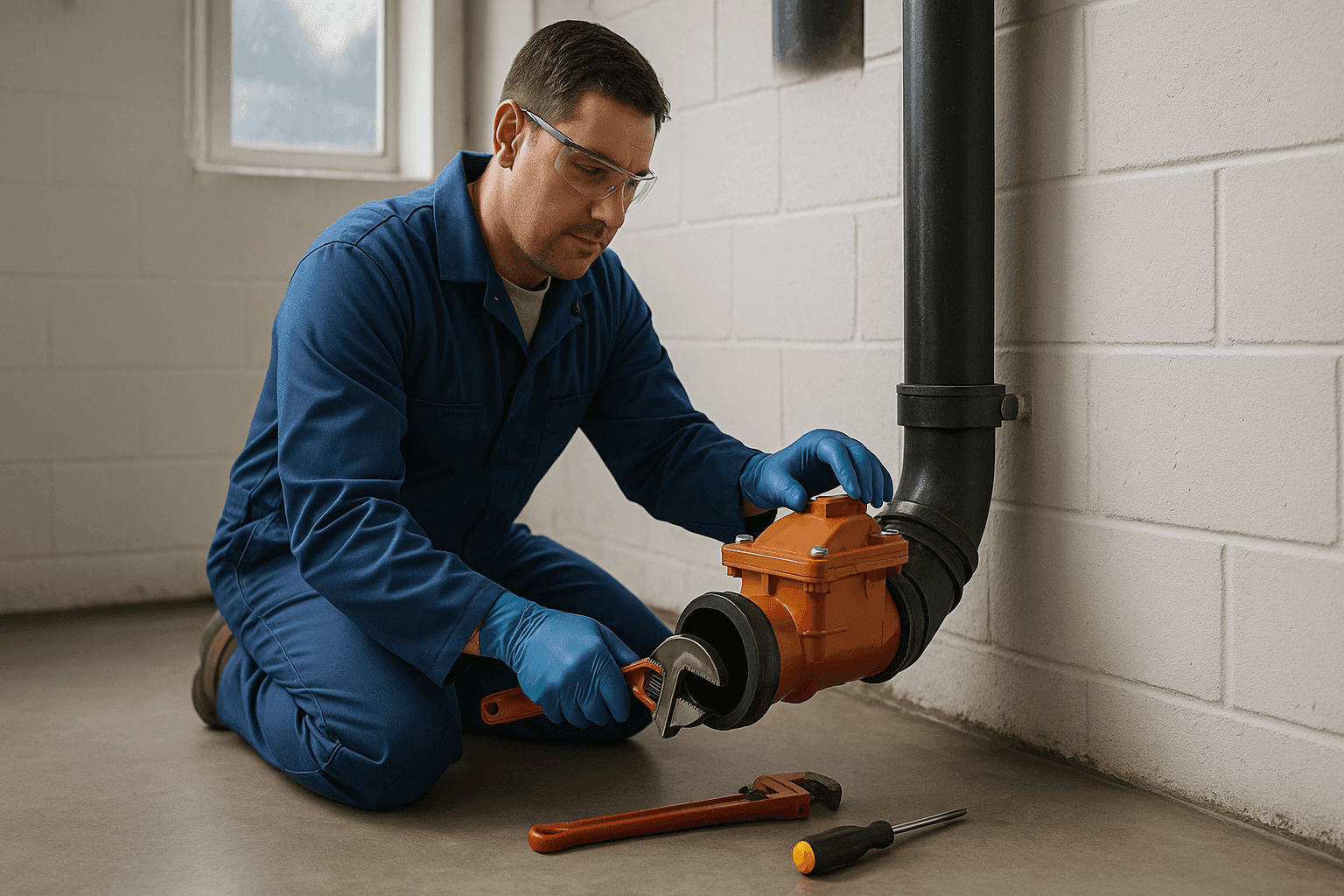
Think of a backwater valve like a one-way gate. Wastewater can leave your home, but stormwater can’t come back in. Many building codes now require these in flood-prone areas (see local code or consult the International Plumbing Code).
- Install on main sewer lines.
- Test yearly to make sure it’s working.
Sump Pumps
A sump pump is your basement’s bodyguard. When water tries to sneak in, the pump sends it right back outside.
- Test your pump before storm season.
- Consider a battery backup—power often goes out during storms.
Regular Drain Cleaning
Grease, wipes, and debris build up over time. Routine drain cleaning keeps your pipes flowing—think of it as flossing for your plumbing.
Backflow Prevention
Backflow devices stop contaminated water from flowing the wrong way. These are especially important for businesses and required by many health codes.
After a Flood 🚨
Floodwaters gone? Take a breath. But don’t relax just yet.
What to Do Next
- Stay safe: Don’t touch standing water—it could be contaminated.
- Turn off electricity: If water is near outlets or appliances, shut off power at the main breaker.
- Document the damage: Take photos for insurance.
- Call emergency plumbing pros: Speed matters. The longer water sits, the worse the damage.
- Ventilate: Open windows and run fans to dry things out (if safe).
If you smell gas, leave immediately and call your utility company.
Quick Safety Checklist
- Wear rubber boots and gloves
- Never mix cleaning products
- Keep children and pets away from flood areas
- Watch for slippery floors
- Use a flashlight—never candles—if power is out
DIY vs. Call a Pro
Some clogs are DIY-friendly—a plunger or snake might clear a simple blockage. But when there’s sewage, flooding, or water where it shouldn’t be, it’s time to step back.
Call a pro if:
- Water is rising fast
- You see or smell sewage
- Multiple drains clog at once
- You’re not sure what’s causing the problem
Rafi Plumbing is ready 24/7 for emergency plumbing issues, from sewer line repair to water heater installation near you.
What Pros Do On Arrival
Our trained team moves quickly:
- Inspect for safety hazards (gas, electric, structural)
- Locate the source of the backup
- Use specialized tools to clear blockages (like augers or hydro-jetting)
- Check for broken or collapsed pipes
- Install or inspect backwater valves and sump pumps
- Sanitize affected areas to prevent mold and bacteria
We follow all relevant plumbing codes and safety guidelines (see local authorities and the National Association of Plumbing-Heating-Cooling Contractors for more).
Prevention & Maintenance 🛠️
A little preparation goes a long way:
- Annual sewer line inspections—catch small issues before they grow
- Test sump pumps every spring and fall
- Have backwater valves checked by a licensed plumber
- Fix leaking pipes promptly
- Keep gutters and downspouts clear
Schedule preventative maintenance with a professional. It’s like getting a yearly check-up for your plumbing.
Costs & Time Factors
Sewer backup repair costs vary widely. Minor drain cleaning might take an hour; major sewer line repair can take all day or longer. Device installation (like backwater valves) adds time and labor.
Factors that affect timing and cost:
- Severity of the backup
- Access to pipes (inside walls, under concrete)
- Age and condition of your plumbing
- Whether water damage restoration is needed
Always ask for a clear assessment before work begins. Our team never rushes important safety checks.
When It’s an Emergency
If water is pouring in or sewage is coming up, don’t wait. Call for emergency plumbing help right away.
Signs you need urgent help:
- Standing sewage in your home or business
- Toilets overflowing with no obvious cause
- Water coming up from basement drains
- Multiple fixtures backing up at once
Fast response limits damage and gets your property back to normal sooner.
FAQ
How often should I have my main sewer line inspected?
Once a year is best, especially in older homes or flood-prone areas.
Can a sump pump stop all backups?
Sump pumps help with groundwater but can’t block all sewer backups. Combine with a backwater valve for full protection.
Are backwater valves required by law?
Many cities require them in certain areas—check with your building department or ask your plumber.
What should I do if my water heater or boiler is flooded?
Turn off the power and call a professional. Never try to relight or restart a flooded appliance.
Local & Seasonal Considerations 🌱
Spring snowmelt, hurricane season, or even heavy summer thunderstorms can all trigger backups. If your area is known for basement flooding or sewer problems, plan ahead:
- Install devices before storm season hits
- Keep emergency plumbing numbers handy
- Review your insurance coverage for water and sewer damage
Remember: code compliance is about safety, not just paperwork.
Don’t let the next storm catch you off guard. Protect your home or business with smart plumbing solutions and fast, reliable help.
Call Rafi Plumbing now — or reach us anytime at 888-600-0415 .